
For decades, family offices have been evaluated by their ability to preserve and grow wealth. Today, a new question is gaining traction in family gatherings: What legacy do we want to leave for society?
This shift in perspective is no accident. It reflects profound transformations in the profile of high-net-worth families, in the expectations of new generations, and in the very understanding of what it means to manage wealth responsibly. For the most prepared family office managers, it also represents a window of opportunity: a competitive advantage that is still largely untapped by the market.
What has changed in the role of family offices?
For a long time, the classic model of asset management It was built on a three-pronged approach: capital protection, long-term growth, and tax efficiency. Philanthropy existed, but it occupied a secondary place; it was a personal activity of the families, treated reactively and disconnected from the wealth management strategy.
This scenario has changed. Several factors combined are reshaping the role that family offices play:
- Growing demand for purpose and legacy.
A study on philanthropy focusing on Family Offices indicates that 771% of families donate to generate social transformation, however, they still treat the subject reactively or do not even include it in their wealth management. (Study: Perspectives and Opportunities of the Philanthropy Agenda in Family Offices). However, only half are consistently engaged in structured initiatives. There is a clear gap between intention and execution, and family offices are precisely in that gap.
- The influence of new generations on family decisions.
Millennials and Generation Z heirs to large fortunes have different expectations than previous generations. For them, wealth and purpose are not opposing concepts. They want to participate in decisions, understand the impact that capital can have on society, and demand consistency between the values that the family declares and the resources it manages.
- The Great Wealth Transfer
According to the Navigating the Future of Wealth 2024 research, it is estimated that more than US$$ 84 trillion will be transferred to future generations in the coming decades. Family offices that are not prepared to advise on these transactions will lose relevance at the very moment when wealth changes hands.
- The search for alignment between wealth, values, and impact.
High-net-worth families are increasingly aware that how their capital is invested—and donated—says something about who they are. Wealth management has ceased to be merely technical; it has also become an expression of identity and values.
Why has philanthropy become more than just about giving?
THE strategic philanthropy It is a structured approach to giving, in which resources are allocated based on clear objectives, a defined theory of change, performance indicators, and governance mechanisms, with a long-term vision. It is the opposite of reactive philanthropy: instead of responding to one-off requests, the family acts as a social investor, choosing priority causes and monitoring the results of the initiatives it supports.
The practical difference between the two models is significant:
| Traditional Philanthropy | Strategic Philanthropy | |
| Logic | Reactive, based on support requests. | Proactive, goal-oriented |
| Selection of causes | Random or based on personal affinity. | Aligned with the family's values and impact thesis. |
| Follow-up | Non-existent or informal | Performance indicators and structured reports |
| Governance | Individual decisions | Processes, criteria and family involvement |
| Horizon | Short term, donation by donation | Long-term vision and legacy building |
This distinction matters because strategic philanthropy is capable of generating far superior results for society while simultaneously adding real value to it. work of family offices, which will allow them to offer a more complete and differentiated service to the families they advise.
How philanthropy strengthens family governance.
Family governance is a central theme for any family office that works with multiple generations. And philanthropy has a unique property in this context: it allows families to discuss values without triggering the emotional responses that often emerge in conversations about money, business, and inheritance.
Many families find it easier to reach a consensus on the cause they want to support than on the division of stock in a company. Philanthropy creates a safe space where members of different generations can make joint decisions, learn to disagree respectfully, and build a shared narrative about who they are as a family.
Philanthropy as a tool for risk and reputation management.
There is a strategic dimension of philanthropy that is still little discussed in family offices: its role in protecting the family legacy and managing reputational risks.
Wealthy families operate under increasing scrutiny. Society, and increasingly regulators, markets, and the media, observe not only the financial performance of these families but also their relationship with the environment in which their businesses operate. In this context, a well-structured philanthropic strategy contributes in concrete ways:
Strengthening the family reputation. Families that act consistently and transparently in the causes they support build a reputation for integrity, an increasingly valuable asset in an environment where trust is scarce.
Stakeholder relations. Philanthropic initiatives build bridges with civil society organizations, governments, universities, and other institutions, expanding the family's relational capital and opening doors that money alone cannot.
Protecting the long-term legacy. Families that actively build their social legacy tend to have more control over how they are perceived by society. Instead of reacting to crises, they actively narrate who they are.
From philanthropy to impact investing
The spectrum ranges from initiatives focused exclusively on social or environmental impact to those seeking financial return combined with impact. Between these two extremes, there are a number of tools and frameworks:
One of the most common confusions among families who begin to explore the topic is how to treat philanthropy and impact investing They are not seen as opposing concepts. In practice, they are part of the same continuum, and sophisticated families learn to navigate the entire spectrum, combining instruments according to their objectives.
One-off donations — direct transfers to civil society organizations, with no expectation of financial return.
Philanthropic funds — structures that organize family donations with defined governance and strategy, allowing for larger and more coordinated allocations.
Endowments — structures that preserve the principal and allocate only the income to impact initiatives, ensuring long-term sustainability for the philanthropic strategy.
Blended finance — a combination of philanthropic capital with private capital to finance projects that do not attract conventional funding due to risk or return profile.
Impact Investment — allocations that intentionally and simultaneously seek both financial return and measurable social or environmental impact.
Understanding this spectrum is fundamental so that families and family offices can structure strategies that are truly aligned with the expectations and profile of each client.
What the most advanced family offices are already doing
The trend is clear: globally renowned family offices, and increasingly in Brazil, are integrating philanthropy and impact investing as strategic services. Among the most observed initiatives in the most advanced firms are:
Creation of dedicated family funds: Instead of scattered donations, families structure funds with their own governance, deliberative council, and defined allocation strategy.
Structuring multigenerational legacy strategies: Legacy planning goes beyond financial assets and includes the impact the family wants to leave on causes that matter to them.
Supporting causes aligned with family values and identity: The choice of causes ceases to be arbitrary and begins to reflect the history, values, and long-term goals of each family.
Support for causes related to climate, education, health, and inclusion: These are the areas that concentrate the largest volume of philanthropic resources from high-net-worth families in Brazil and the world, and where the potential impact is most significant.
Participation in philanthropic networks and communities: Families are seeking to exchange experiences with peers, learn from other families' strategies, and expand their impact through collaborative initiatives.
How to structure a family philanthropy strategy
For wealth managers who want to start this conversation with their families, or for families who have arrived at the topic on their own, the good news is that there is a tried and tested approach. Structuring a family philanthropy strategy doesn't have to be a complex process, and you can count on us. Sitawi Finanças do Bem, which supports Family Offices in this process.
The role of specialized organizations in this process.
For many families and family offices, the biggest obstacle isn't the will to act, but not knowing where to start and how to do it well. This is where specialized intermediary organizations, like Sitawi, become indispensable strategic partners.
With over two decades of experience in charitable finance in Brazil, Sitawi has a solid track record of supporting high-net-worth families and family offices in structuring philanthropic strategies with rigor, depth, and sensitivity to each family's context.
The portfolio of solutions from Sitawi for family offices It covers the entire strategic philanthropy cycle:
Maturity diagnosis — Assessment of the family's current situation, interests, and goals, including mapping opportunities and identifying gaps.
Philanthropic mandate — Definition of impact thesis, allocation criteria, and guidelines for the family strategy.
Curating organizations — qualified selection of social and environmental initiatives aligned with the family's profile and objectives, with robust due diligence.
Impact report — structured reports that allow for monitoring and communicating the results of supported initiatives.
Philanthropy Department as-a-Service — For family offices that want to offer structured philanthropy to the families they advise without assembling an in-house team, Sitawi acts as a dedicated philanthropic area, in a white-label model.
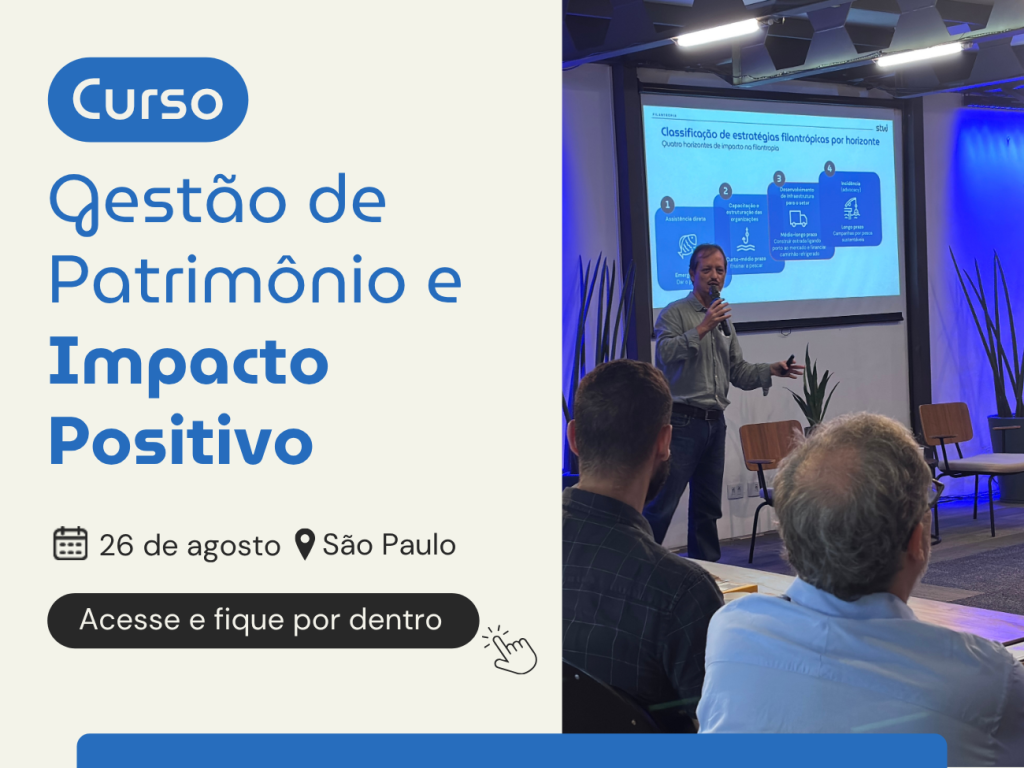
Team training — courses and training programs for high-net-worth individuals who want to incorporate philanthropy and impact investing into their advisory repertoire.
This combination of technical expertise, network of relationships, and execution capacity is what differentiates a quality mediated approach and allows families to transform intention into real impact.
In a landscape where capital, reputation, and purpose are increasingly interconnected, strategic philanthropy has ceased to be a complementary activity. For many family offices, it has become an essential tool for strengthening family governance, preparing new generations, and building a legacy capable of lasting for decades.
The firms that understand this before others will have a competitive advantage that is difficult to replicate: the trust of families not only as managers of their financial assets, but as partners in building what they want to leave for the world.
And the time to structure this offer is now, while demand is growing and the market is still learning how to respond.
Contact us and learn how to structure the philanthropy of the families you serve.


