Climate change, increasing social inequalities, and the impacts of the unbridled exploitation of natural resources are challenges that require swift and effective responses. In this scenario, Sustainable Development Goals (SDGs) emerge as a global compass for governments, companies, organizations and individuals who want to contribute to a more just, prosperous and balanced future.
But to achieve these goals, it is necessary large-scale financing and the active participation of different actors. The good news is that there are already ways to transform capital into positive impact. And the investment in the SDGs is one of them.
What are the SDGs?
You Sustainable Development Goals (SDGs) are part of Agenda 2030 of the UN and were established in 2015 as a global pact to address humanity's greatest challenges. They are 17 interconnected goals that unfold into 169 specific goals, covering topics such as poverty eradication, combating climate change, gender equality, access to quality education and ecosystem preservation.
More than abstract goals, the SDGs they are practical guidelines that each country adapts to its reality. Governments use them in public policies, companies incorporate them into their strategies ESG, social organizations transform them into concrete projects, and citizens can guide their consumption and investment choices based on them.
Where are we today?
Despite efforts, progress towards SDGs is still insufficient. Recent data show that only 17% of the goals are on the right track. Almost half show timid progress, while more than a third are stagnant or declining.
This delay has real consequences: between 2019 and 2022, 23 million people have been pushed into extreme poverty and more than 100 million now face hunger. Furthermore, developing countries face a huge financing gap: they are missing about US$ 4 trillion per year so that the SDGs are achieved.
Given this, it is clear that traditional solutions are not enough. It is necessary mobilize new capital flows and reshape the global financial architecture to unlock resources that allow us to face today's challenges.
The role of impact investing in advancing the SDGs
It is in this scenario that the impact investing gains relevance. Unlike traditional investment, which prioritizes exclusively financial return, impact investing combines economic performance with creation of socio-environmental value.
Investors analyze not only the profitability and risks of a business, but also its ability to generate positive transformation, whether by conserving the environment, promoting social inclusion, or expanding access to healthcare and education.
And contrary to what many people think, this model does not exclude profit. Thus, investors can achieve good financial results and, at the same time, contribute to a more sustainable future.
Impact Businesses: Solutions for Real Challenges
You impact business are the protagonists of this transformation. According to the National Strategy for Investments and Impact Businesses (Enimpacto), these are ventures whose main mission is to generate a positive socio-environmental impact while also seeking sustainable financial return.
In practice, they operate like conventional companies — selling products or services in areas such as education, health, agriculture, clean energy or technology — but with one crucial difference: intentionality. The socio-environmental cause is not an appendix, but rather the center of the business model.
These companies demonstrate that there is no contradiction between social and economic ambition. They offer scalable solutions to structural problems, reduce inequalities, promote inclusion, and contribute to environmental preservation. By constantly measuring their results, they become fundamental allies to accelerate the SDGs and create a more balanced economy.

Blended finance: how companies and organizations can invest in the SDGs at scale.
For companies with ESG agendas and development organizations what They seek to go beyond one-off donations., O blended finance or combined financing This represents one of the most effective strategies available today. The mechanism combines resources of different natures and risk profiles: philanthropic or public capital acts as a catalyst, reducing perceived risk and opening up space for private capital to enter initiatives that would otherwise not attract conventional investors.
In practice, This means that a company can structure or participate in a fund that finances impact businesses aligned with the SDGs, obtaining a market-competitive financial return while simultaneously generating measurable socio-environmental value.. For development organizations, blended finance broadens the reach of available resources: each real donated can leverage multiples of additional capital, increasing the overall impact without necessarily increasing the volume of their own resources.
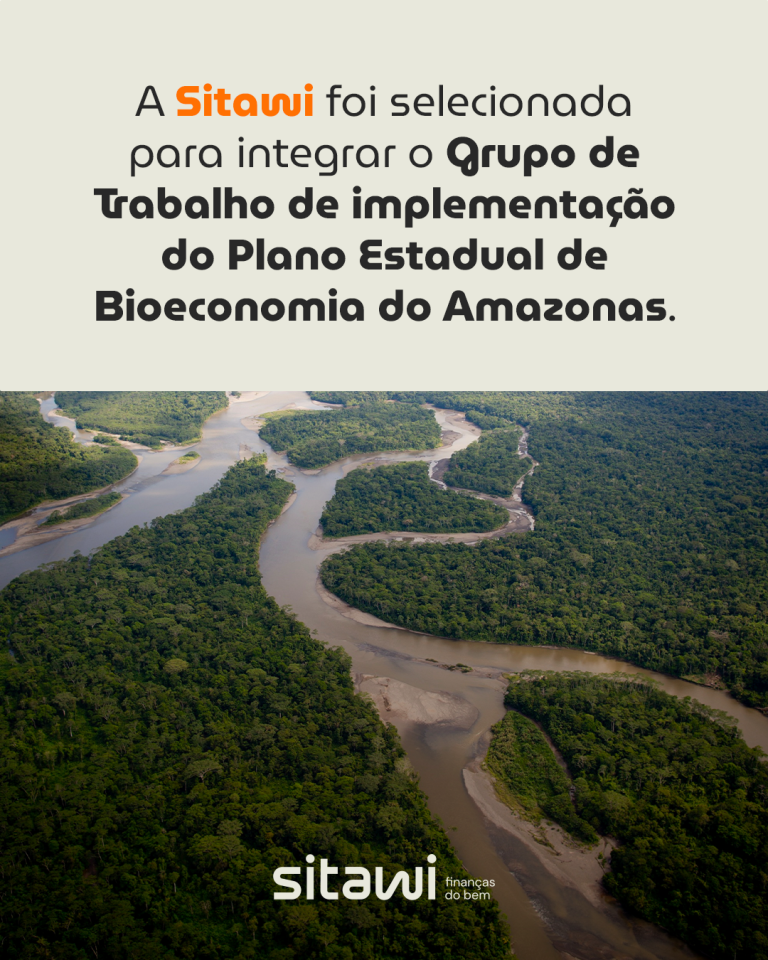
This is the model that Sitawi Finanças do Bem Structure and operate. With over R$ 37 million mobilized in funding for socio-environmental impact businesses, Sitawi It acts as a strategic partner for companies and organizations that want to transform their social investment strategies into robust financial operations, with solid governance, rigorous selection criteria, and impact measurement..