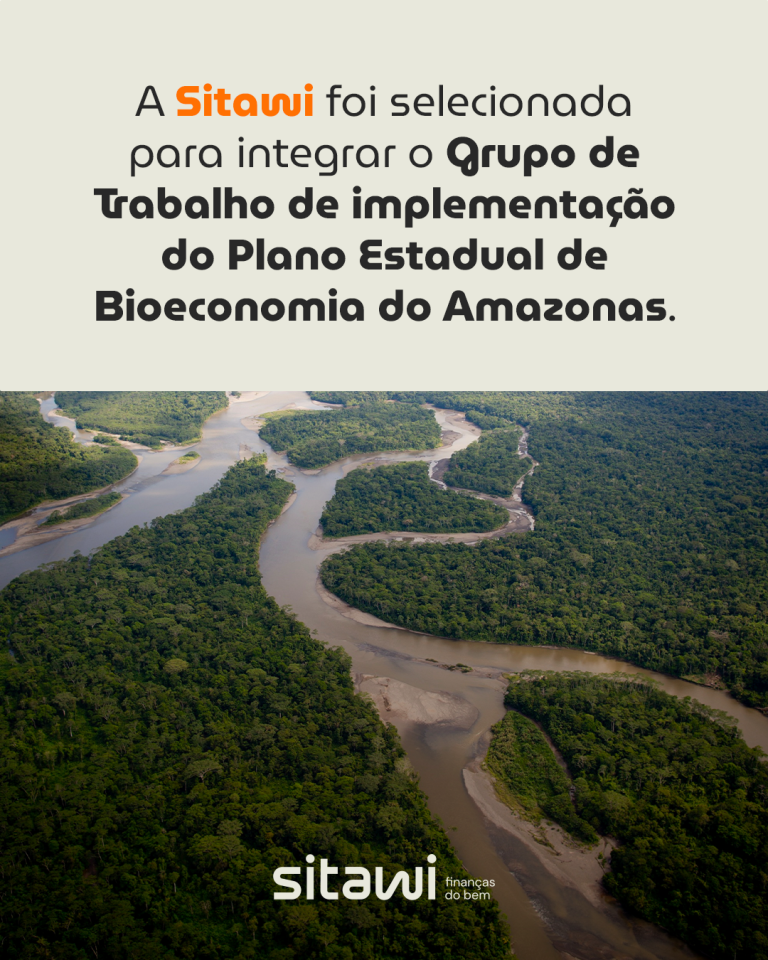
Faced with a recent finding by local populations and a denunciation published in the press about the circulation of rafts and mining dredgers in Conservation Units of the Juruá River, the Sitawi, as coordinator of the Juruá Middle Territory Program, expresses its position against the installation of illegal exploration activities in favor of defending the integrity of the territory and the security of its communities.
According to text published on the news portal Amazônia Real, residents of the Extractive Reserve (RESEX) of Baixo Juruá intercepted a ferry that was navigating the Andirá River, located within the limits of this Conservation Unit. After notifying the prospectors that it was a Protected Area, the ferry withdrew from this part of the river. However, the situation continues to alarm the population because, according to local sources, the same vessel is still anchored in another location on the Juruá River and two new ferries were spotted on the way to the Andirá River.
We endorse the Juruá Middle Territory Forum (TMJ), an institution made up of 19 public and private organizations operating in the territory, and the National Council of Extractive Populations (CNS), which filed a complaint with the Federal Public Ministry and other bodies., condemning the incident and requesting the adoption of concrete actions to prevent the installation of illegal mining in the region.
According to a survey carried out by the entity, there are at least seven mining processes open at the National Mining Agency with an impact on the region, however, the Forum emphasizes that none has a legal grant for any mineral exploration activity in these municipalities.
The sustainable management of natural resources and the conservation of biodiversity are essential pillars for the territory and constitute the basis of the production chains carried out by traditional agro-extractive and indigenous communities. Among the activities focused on biodiversity conservation and sustainable income generation are, for example, the management of wild arapaima and other fish; monitoring of chelonian conservation boards; extractivism of oilseeds, latex and açaí; environmental education programs and local organizational strengthening.
Thus, we emphasize to civil society and public bodies the concern of those involved in the Juruá Middle Territory Program with the episode and the threat it represents to the sovereignty of the territory and its protected areas. We alert to the seriousness of the implementation of illegal mining activities, which can cause irreversible damage to biodiversity, human health and local value chains, making sustainable activities unfeasible through the historic collective organization in these communities.
1. https://amazoniareal.com.br/balsa-de-garimpo-invade-o-jurua-area-mais-preservada-da-amazonia/
2. In addition to the Federal Public Ministry, the note was also sent to the Public Ministry of the State of Amazonas (MPE/AM), Regional Superintendence of the Federal Police in Amazonas, State Secretariat for the Environment of Amazonas and to the Public Prosecutor's Office of Carauari .
About the Juruá Middle Territory Program
The Juruá Middle Territory Program is part of the Juruá River Ramsar Site, an international recognition that reinforces the importance of biodiversity protection measures and recommends that they be strengthened and expanded. The region is made up of three conservation units: the Uacari Sustainable Development Reserve, the Extractive Reserves (Resex) of Baixo Rio Juruá and Médio Juruá, the Deni Indigenous Land, in addition to a vast area along the river.
Since 2017, the PTMJ has been operating on three integrated pillars: sustainable livelihoods, biodiversity conservation and social cohesion. The actions focus on supporting the strengthening of the Médio Juruá product chains, promoting local entrepreneurship, the sustainable use and management of natural resources and the strengthening of community organizations and their local governance. We seek, therefore, to guarantee the improvement in the management of extractive-based enterprises, the population's quality of life and the conservation of the Amazon's biodiversity. In all, the program supports more than 4,500 residents of 61 riverside communities.