As the global average temperature has been steadily rising, we are running out of time to put the brakes on climate change and the costs of delays in decision-making and execution of actions are already taking on enormous proportions.
Therefore, it is necessary to develop strategies that promote the transition to a low carbon economy, activities of mitigation of greenhouse gas (GHG) emissions and adaptation to the impacts of climate change. And this will only be possible with the climate finance.
What is climate finance?
According to the United Nations Framework Convention on Climate Change (UNFCCC), O climate finance and the financing local, national or transnational from public, private and alternative sources, which aims to support actions to mitigate and adapt to climate change, such as installing renewable energy for small farmers or restoring degraded areas.
This financing Visa reduce greenhouse gas emissions, in addition to reduce vulnerability and improve the resilience of human and ecological systems in the face of adverse impacts of climate change.

Climate Finance Overview
Efforts to organize and develop the climate finance have been an agenda in international climate governance since the Eco-92, held in Rio de Janeiro in 1992. Also known as Earth Dome or officially as United Nations Conference on Environment and Development, this conference is a milestone in the fight against climate change. It was the first to bring together governments, civil society and the private sector on a large scale to establish measures aimed at tackling the increase in greenhouse gas emissions.
But the real milestone for climate finance was the Paris Agreement, established by 195 countries in the 21st Conference of the Parties (COP21), in 2015. This agreement assumed the commitment to immediately reduce global greenhouse gas (GHG) emissions with the aim of keeping global temperature rise well below 2°C and, ideally, limit the increase to 1.5°C.
Still, according to report of the Climate Policy Initiative, the average annual volume of climate finance reached about US$1.3 trillion in 2021/2022, which corresponds to 1% of global GDP. This value is significantly below of approximately US$ 8.1 trillion estimated to be needed annually through 2030.
In this sense, it is clear that, despite the efforts made, there are significant challenges associated with the climate finance. Among them are the resource mobilization sufficient to achieve the established climate goals, the setting priorities for the allocation of resources and the distribution of funds in a fair, effective and transparent manner.
Ways to unlock climate resources
There are some ways to promote the climate finance, including public and private approaches. The public climate finance is composed of resources obtained through taxes and other government revenues, destined for both international and national initiatives. The private, refers to the amount granted by the private sector — companies and banks, for example.
However, it is important to highlight that the government sector alone does not have sufficient resources to unlock this agenda. Therefore, the private sector plays a crucial role in encouraging actions mitigation and adaptation to the climate change. In addition to benefiting society, the climate finance provides an opportunity for investors to obtain sustainable long-term returns and support innovative projects that promote positive socio-environmental impact and are profitable. Therefore, it is essential to have a solid governance structure, with strategies, methodologies and metrics capable of assessing systemic risks, to increase private investments.
In addition, an innovative model of financing for projects aligned with the UN Agenda 2030, known as Hybrid Finance or Blended finance. This instrument is about the combination of resources public, philanthropic or private for generate positive impact for investors, communities and nature alike.
There is no doubt about the importance of climate finance to achieve the decarbonization of the various sectors of the economy and promote greater resilience through the implementation of adaptation actions in the face of climate impacts that are already part of our daily lives. Therefore, it is necessary to intensify joint efforts to ensure a climate finance fair and effective.
Types of funds for climate finance
The climate finance is a broad topic, which can involve a large number of institutions.
Discover some Fund options for financing:
- National Fund on Climate Change (FNMC): finances projects, studies and ventures to mitigate climate change and adapt to its effects. It is linked to the Ministry of the Environment (MMA) and provides resources in two modalities: reimbursable and non-reimbursable;
- Amazon Fund: works on actions to prevent, monitor and combat deforestation, and to promote the conservation and sustainable use of the Legal Amazon. Up to 20% of the resources can be used to support the development of systems to monitor and control deforestation in other Brazilian biomes and in other tropical countries;
- Green Climate Fund: works to finance greenhouse gas mitigation initiatives and climate change adaptation initiatives in developing countries;

Climate finance in Brazil
In the G20 presidency this year and as the host of the COP30, in 2025, the Brazil has the opportunity to lead by example, promoting nature restoration and social development through innovative financial solutions that meet national needs and open doors for other developing countries.
Countries with large forest areas and biodiversity, such as Brazil, have significant potential to mobilize resources for nature-based solutions, while contributing to the social development through the job creation and income.
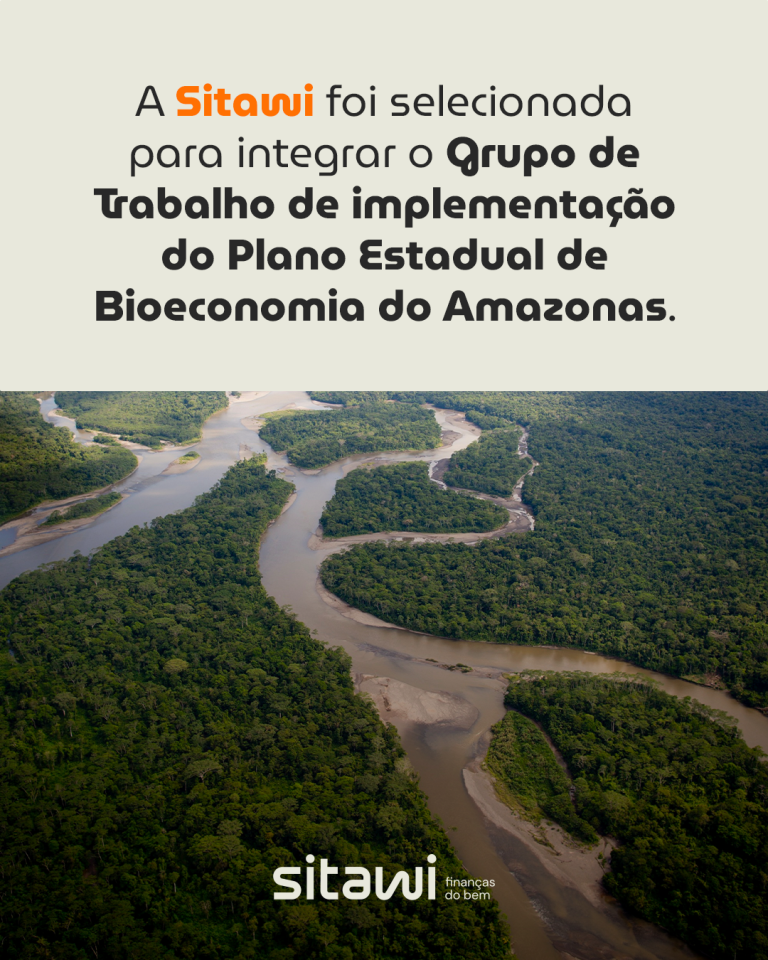
In Brazil, reducing deforestation is a powerful way to cut emissions, since the Amazon Rainforest alone stores the equivalent of 442 billion tons of CO22. Therefore, the mechanisms of Reducing Emissions from Deforestation and Degradation (REDD), combined with conservation actions, sustainable forest management and increase in forest carbon stocks (REDD+), have gained important space in national discussion and international interest.
In this context, it is crucial to highlight the importance of a fair energy transition, combating deforestation and illegal practices in the Amazon, and developing bioeconomy projects that are socially inclusive.
Climate finance in practice
We understand that the urgency and the complexity of climate change require innovative financing processes, which make possible effective solutions for preserve nature and for face climate challenges.
For this, the Sitawi Finanças do Bem develops financial solutions for the tackling climate change, with the aim of find the best financial instrument for each biome and need. For example, our role in climate finance through REDD+ mechanisms is to translate these opportunities into positive impacts for people and nature through the implementation of socio-environmental safeguards, as well as the development of benefit-sharing funds. Additionally, by bringing together government, private and philanthropic resources, we understand what other options there are for investing in nature and generating positive socio-environmental and financial impact.
Are you interested in developing a financial solution that promotes a positive impact for people and nature? Talk to us!